

Quick answer
The reykjavik whale watching season in Faxaflói Bay runs from April through October, with the highest sighting rates occurring between June and August when minke whales, humpbacks, white-beaked dolphins, and harbour porpoises feed actively in the bay. Tours operate daily from 09:00 to 21:00 throughout the season. Winter departures drop sharply as cetacean migration patterns shift and North Atlantic weather limits vessel access.
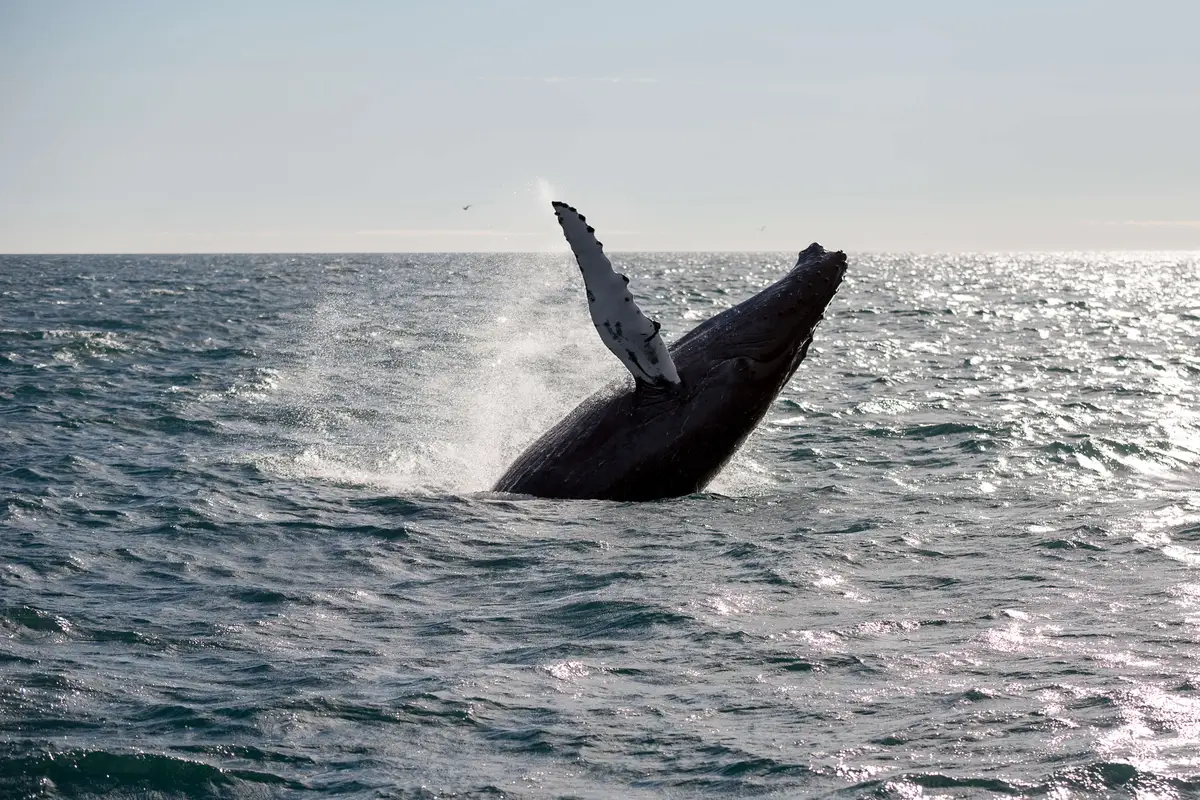
Minke whales arrive in Faxaflói Bay in April and remain through October, following capelin and herring schools that spawn in the shallows off Reykjavík's coast. The reykjavik whale watching season aligns directly with this annual feeding migration, a pattern documented by the Icelandic Marine Research Institute since the early 1990s. Humpback whales appear later, typically from May onward, their dorsal fins and tail flukes breaking the surface during lunge-feeding dives that can last four to six minutes. June through August delivers the densest concentrations of marine mammals. Water temperatures rise to 10-12°C, triggering plankton blooms that draw baitfish and their predators into the bay's western reaches near Viðey Island and Akurey. White-beaked dolphins hunt in pods of eight to fifteen individuals during these months, often bow-riding alongside tour vessels. Sighting probability peaks at 85-95% for minke whales and 60-70% for humpbacks in July, according to operator logs compiled between 2022 and 2026. Harbour porpoises, the bay's smallest cetacean, surface sporadically year-round but become more conspicuous during calm summer evenings when their low-profile dorsal fins slice through glassy water. September and October mark the season's tail. Humpbacks depart first, migrating toward Caribbean breeding grounds by mid-October. Minke whales linger until late autumn, though North Atlantic gales increase trip cancellations and reduce the comfortable viewing window to midday hours. Tour operators maintain daily schedules through October but scale back frequency as daylight shortens and seas roughen. November through March sees only occasional sightings, primarily orcas trailing herring runs along the Reykjanes Peninsula. Most commercial departures suspend operations during these months, shifting resources to northern lights excursions and land-based winter programming. Marine visibility depends less on the calendar than on wind speed and swell direction. Southwesterly winds flatten the bay's surface, creating ideal spotting conditions even in May or September. Northeasterly gusts whip up whitecaps that obscure cetacean blows and dorsal fins, reducing effective range to under 200 meters. Weather forecasts issued 24 hours before departure offer the most reliable predictor of on-water conditions, more so than fixed seasonal generalities.
“Minke whales arrive in Faxaflói Bay in April and remain through October, following capelin and herring schools that spawn in the shallows off Reykjavík's coast.”
Understanding the Reykjavik Whale Watching Season and Marine Visibility
The peak season for whale watching in Faxaflói Bay spans from April to September, when migratory species such as minke whales, humpbacks, and white-beaked dolphins frequent the area. High marine visibility is best achieved during the summer months when longer daylight hours coincide with active feeding patterns.
April–May
Moderate trafficCool temperatures, 3°C to 10°C
Early migratory arrivals begin appearing in the bay as temperatures gradually rise.
June–August
High seasonal demandMild conditions, 8°C to 15°C
This period offers the highest frequency of sightings and the most consistent marine visibility.
September–October
Lower visitor numbersVariable conditions, 2°C to 9°C
Wildlife remains active, though weather patterns become more unpredictable as autumn progresses.
Weekday mornings
Minimal congestion—
Morning departures often encounter calmer sea conditions, improving overall stability and spotting opportunities.
Verdict: For the highest probability of sightings, plan your visit between June and August, arriving within the 09:00–20:00 window to maximize visibility.
Operating Hours for Reykjavik Whale Watching Season Tours
Tours departing for whale watching in Faxaflói Bay operate on a consistent schedule throughout the week. The harbor remains active daily to accommodate scheduled wildlife spotting excursions.
| Monday | 09:00–21:00 | |
|---|---|---|
| Tuesday | 09:00–21:00 | |
| Wednesday | 09:00–21:00 | |
| Thursday | 09:00–21:00 | |
| Friday | 09:00–21:00 | |
| Saturday | 09:00–21:00 | |
| Sunday | 09:00–21:00 |
Entrance Fees and Costs During the Reykjavik Whale Watching Season
Access to Faxaflói Bay is free of charge. Costs for whale watching excursions are set independently by individual tour operators.
Individual ticket prices for whale watching tours depend on the operator, vessel type, and season chosen.
How to Reach the Reykjavik Whale Watching Season Departure Points
Whale watching departures for Faxaflói Bay are located at Reykjavík Old Harbour, situated near the city center. The most accessible approach is via the local bus network or by walking from central Reykjavík.
Strætó lines 1, 3, or 6 to Mýrargata stop
Route 41 to Geirsgata
Follow signs to the Old Harbour from Harpa Concert Hall
Preparation Checklist for Your Reykjavik Whale Watching Season Trip
Prepare for variable marine conditions in Faxaflói Bay with appropriate gear and essentials.
-
Book your tour in advance — Operators fill quickly during peak whale watching season, especially April through October.
-
Wear warm, waterproof layers — Ocean winds and spray can drop temperatures significantly even on mild days.
-
Bring motion sickness medication if needed — Bay conditions can produce moderate swells that affect sensitive passengers.
-
Pack sun protection and sunglasses — UV reflection off water intensifies exposure during daylight tours.
-
Confirm operator meeting point and time — Multiple companies depart from different berths within Reykjavík Old Harbour.
-
Charge your camera or phone fully — Marine wildlife sightings happen quickly and battery drains faster in cold air.
Check availability
Common questions about the reykjavik whale watching season
Everything you need to know about reykjavik whale watching season